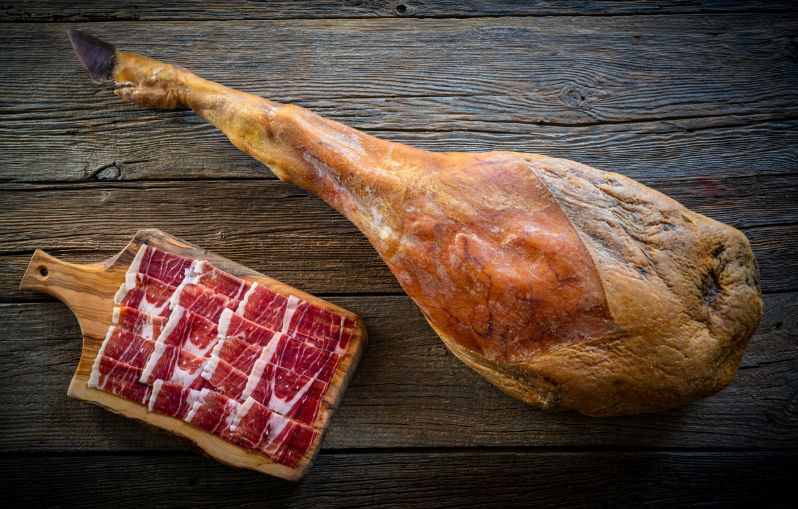
While both products are emblems of Spanish gastronomy, Jamón Ibérico and Jamón Serrano are, in fact, very different products. Understanding these differences will not only help you better appreciate each bite, but also make the best purchasing decision at El Mariscal del Jamón.
1. The Mother of All Differences: The Breed
The most fundamental distinction lies in the breed of the pig:
- Jamón Ibérico: Comes from Ibérico breed pigs, whose racial purity must be at least 50%. The key to this breed is its unique genetics, which allow it to infiltrate fat into the muscle (the famous "marbling"), providing unmatched juiciness, texture, and aroma.
- Jamón Serrano: Comes from white breed pigs (such as Duroc, Pietrain, or Landrace), which are more common and do not have the ability to infiltrate fat into the muscle like the Ibérico pig.
2. Diet and Environment: The Flavor of the Dehesa
Diet and natural environment are crucial, especially for the highest category of Ibérico ham:
| Classification | Diet | Label | Quality Notes |
|---|
| Jamón de Bellota 100% Ibérico | Acorns and natural resources of the dehesa. | Black | Highest quality. Complex flavor and fluid fat. |
| Jamón de Cebo de Campo Ibérico | Feed and natural pasture. | Green | Free-range raised in the countryside. |
| Jamón de Cebo Ibérico | Feed in feedlots. | White | Raised in feedlots. |
| Jamón Serrano (or Cured) | Cereal-based feed. | No color labels. | Not governed by the Ibérico Standard. |
3. Time: The Secret of Curing
The curing process is where the ham develops its deep flavor and complexity.
- Jamón Ibérico: Requires a much longer curing period due to its higher fat content and size. It can range between 24 and 48 months (for Bellota), or even longer.
- Jamón Serrano: The curing time is generally shorter, ranging from 9 to 24 months. The average curing time for a high-quality Serrano (Gran Reserva) is about 15 months.